
How to build a shed under a deck. The following youtube video covers some important factors to consider when building such a deck.
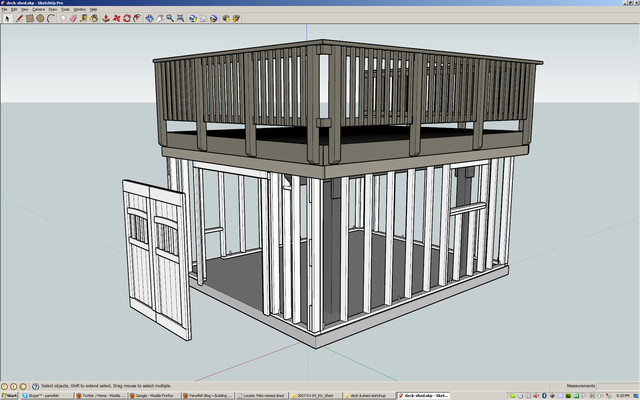
I used 3dsmax to model my deck and shed.
I recently converted the 3D deck & shed plans into sketchup so that others can benefit.
Feel free to download the sketchup file and use Google Sketchup to view, measure, and modify my shed/deck plan for your own use.
FREE Google Sketchup Plans for my deck and shed.
Back in 2001 my new home needed a deck. I designed a deck that was small and simple.
The 2 posts and single beam were massive screwed and glued planks.
I am proud of the fact that I single handedly designed and built my deck.
It was a lot of fun figuring out how to lift that heavy, wet, pressure-treated beam onto the posts all by myself.
The posts weren’t small either, when you consider they are almost 6 feet underground!
Overkill should be my new middle name.
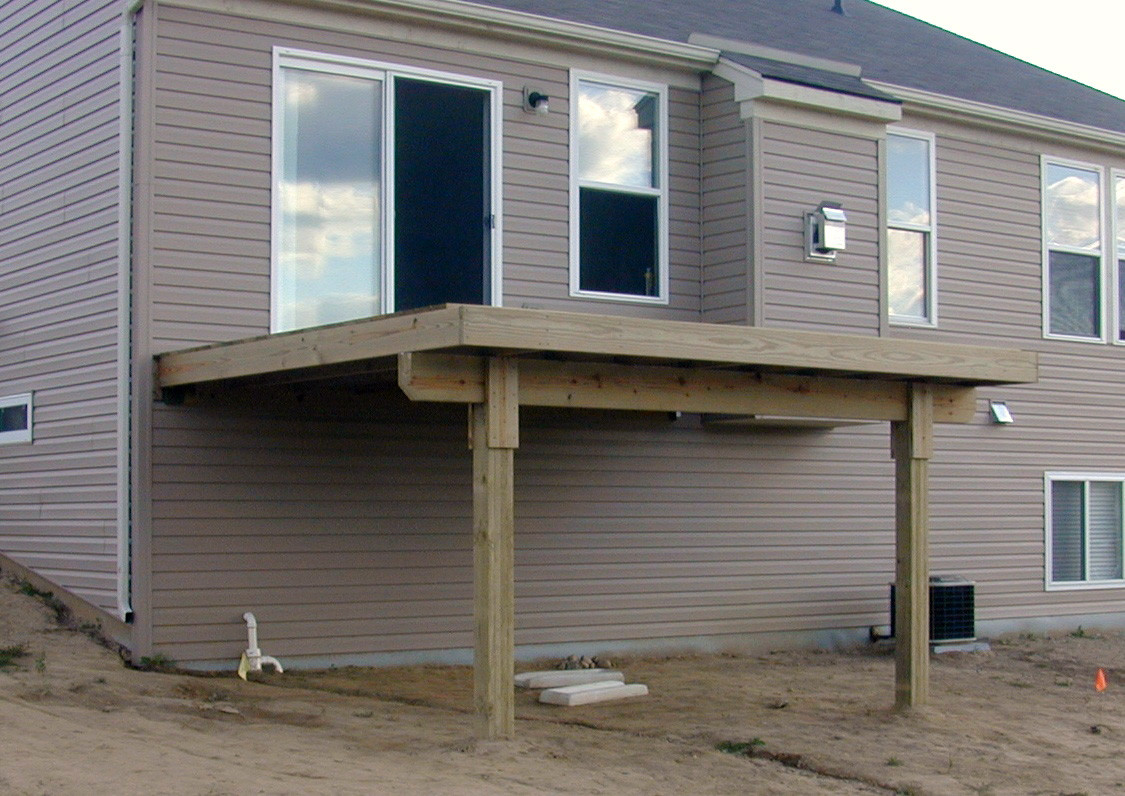
Designing my deck with only 2 posts, allowed plenty of space for a shed.
The first stage of building my shed was to build the roof within the joists of the deck.
This stage took a long time and a bunch of thought.
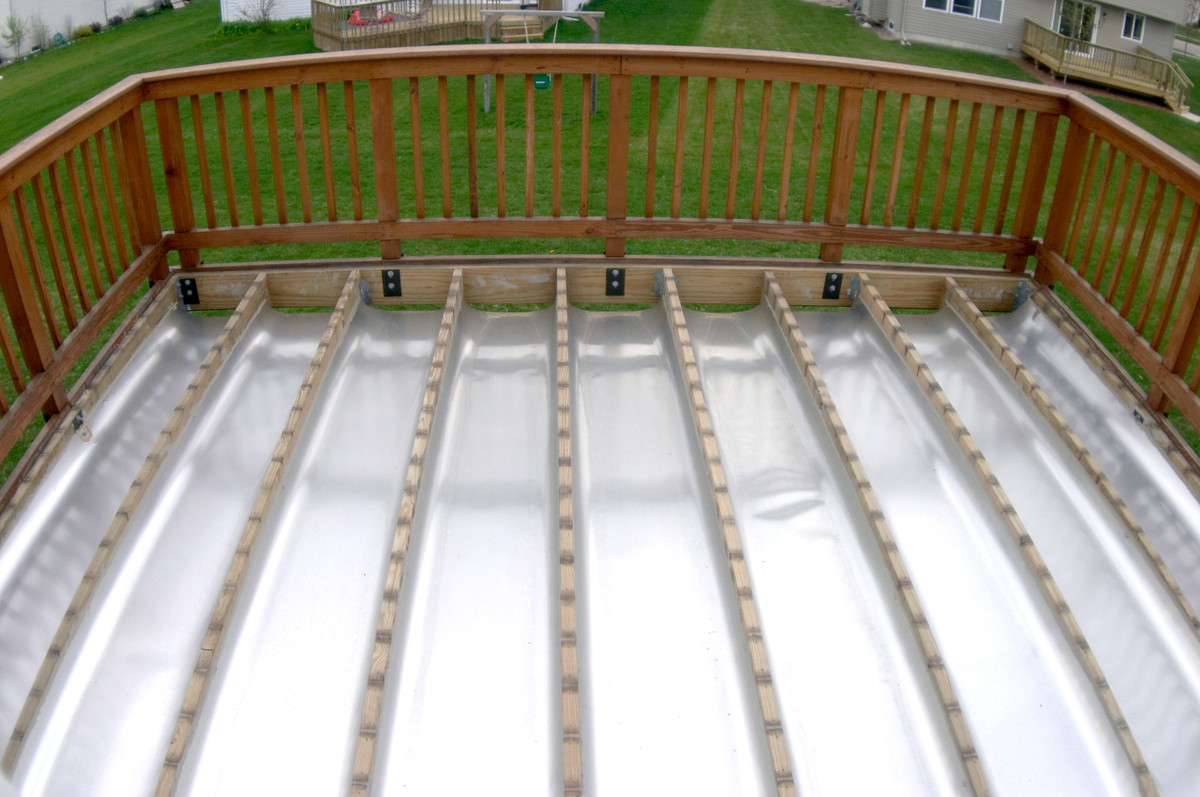
I decided to build an angled trough system with curved sheets of aluminum flashing.
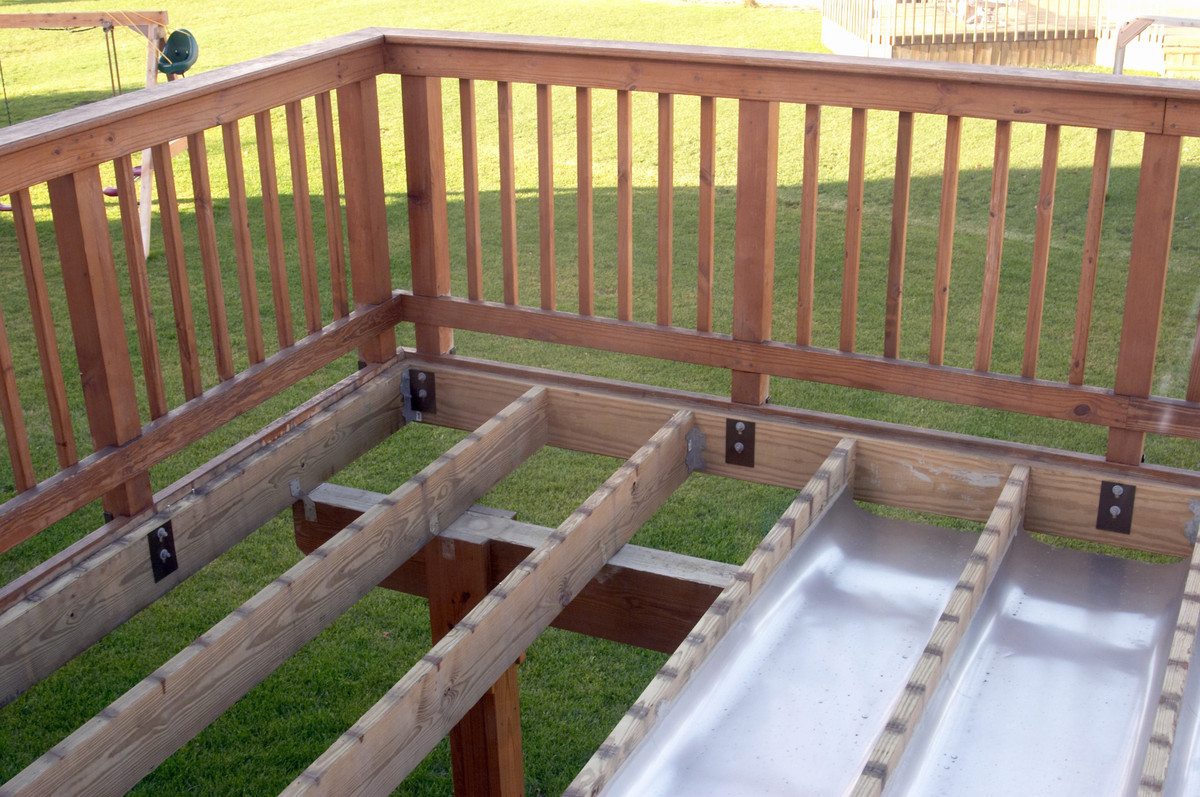
Here you can see the underside and the gradual slope for rain runoff.
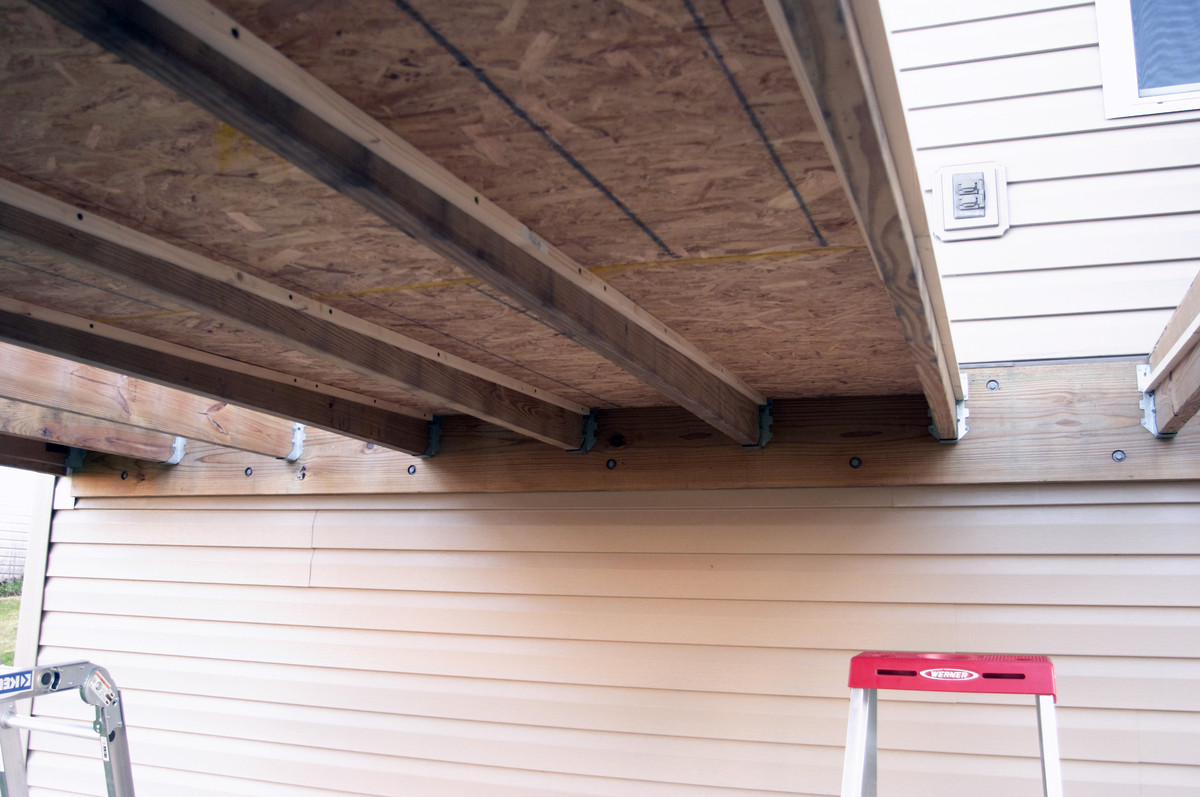
This was an incredibly tedious process. I used a large quantity of industrial caulk to seal the aluminum to the joists.
This tedium will be worth it because it maximizes my sheds headroom.
I’m 6′ 3″ and there is just 1″ of headroom from the joists.
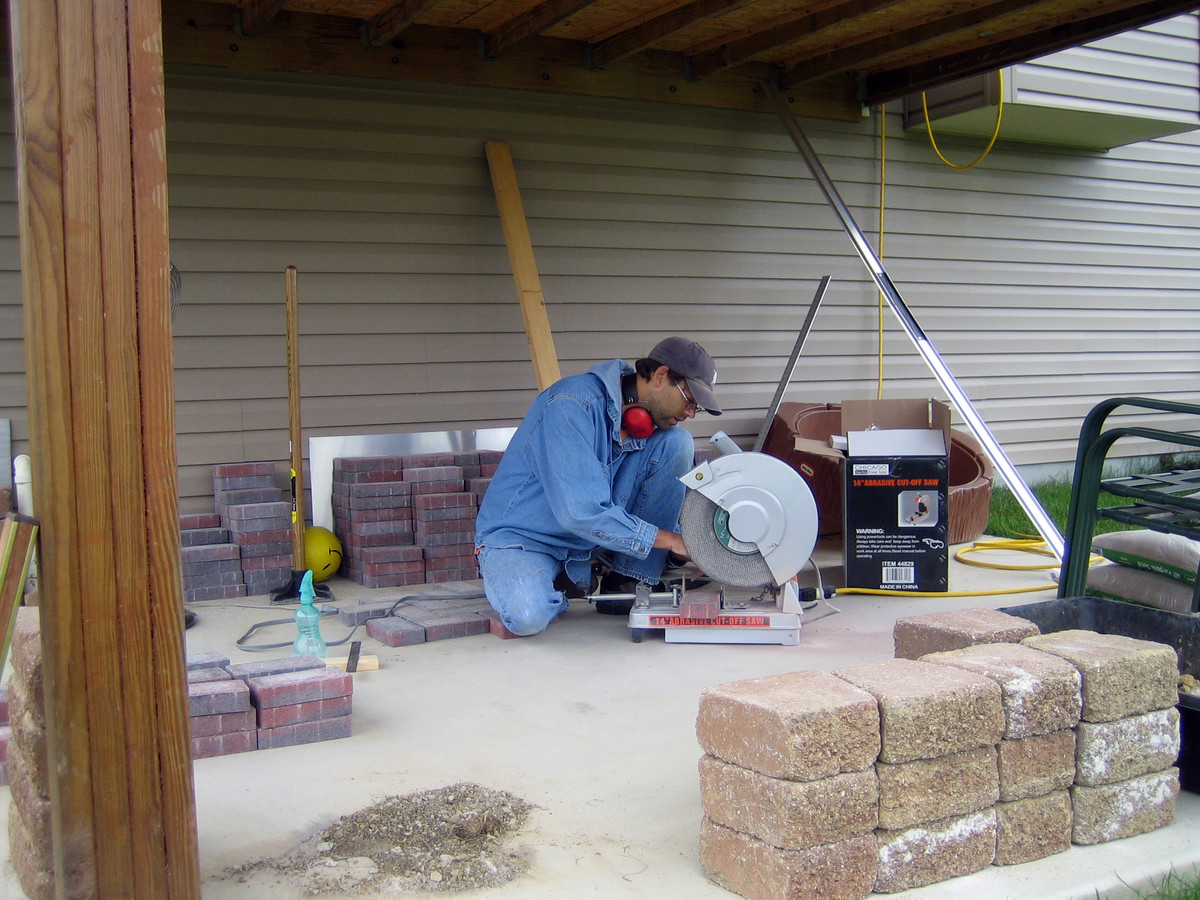
The next time I need to cut bricks… I’ll get a diamond blade.
It sure took me a long time to cut them with an abrasive disc.
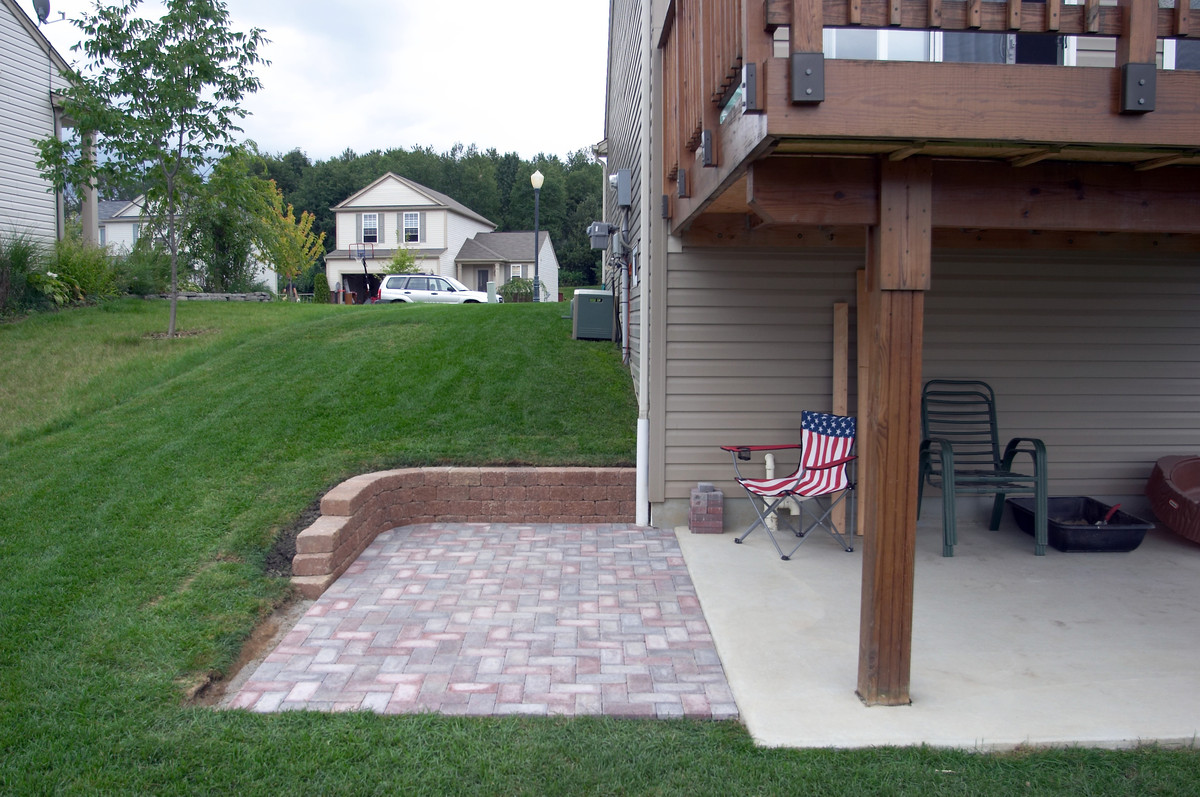
The shed roof survived the winter and showed no leaks. Now the next stage. I had a concrete pad poured. I decided to put my shed entry on the left side of the deck, so I had to dig the hillside down and create a patio for the doorway. This summer was incredibly hot and moving my sprinkler lines was no fun.
It’s took an eternity to figure out how to build the walls. I had to leave a gap between the walls and the deck. I expected the concrete to heave in the winter.
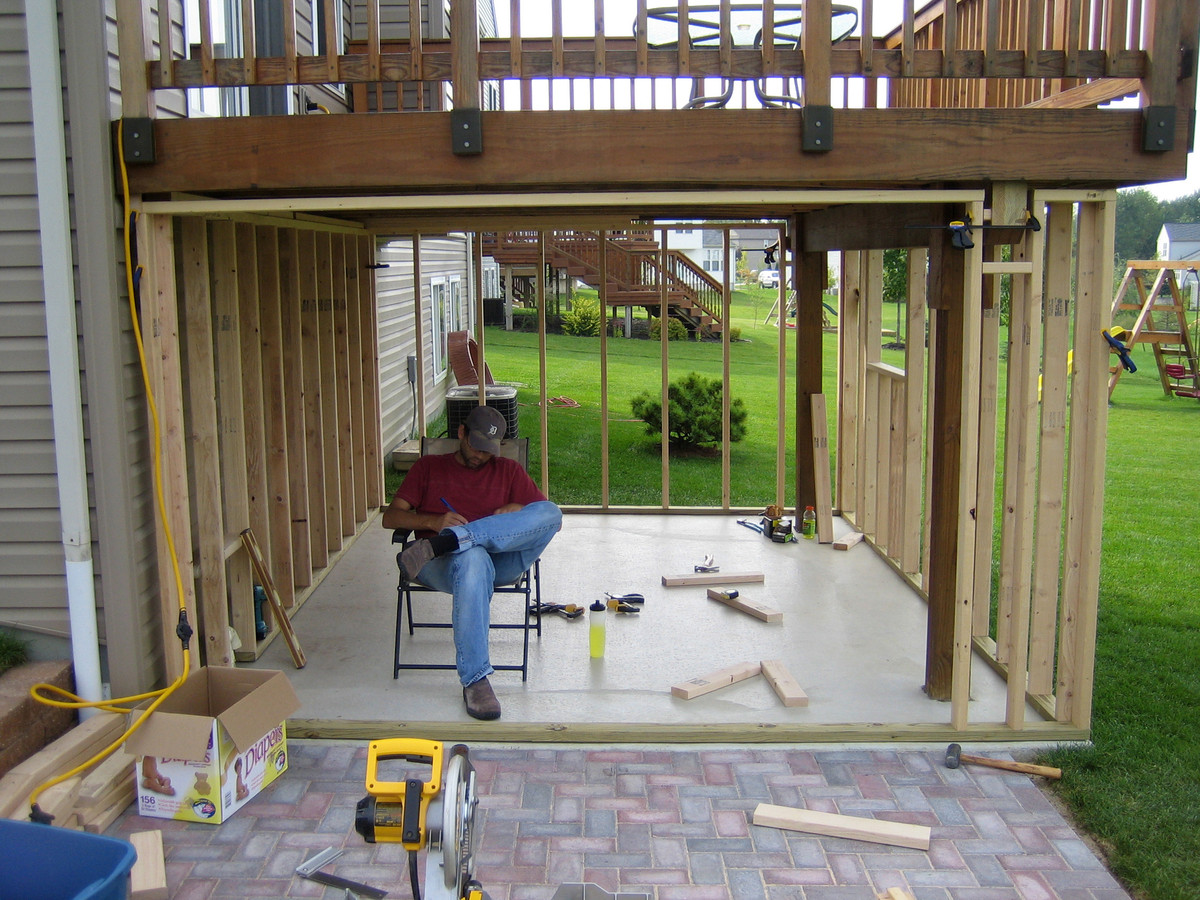
My excitement is building and I can see the light at the end of the tunnel!
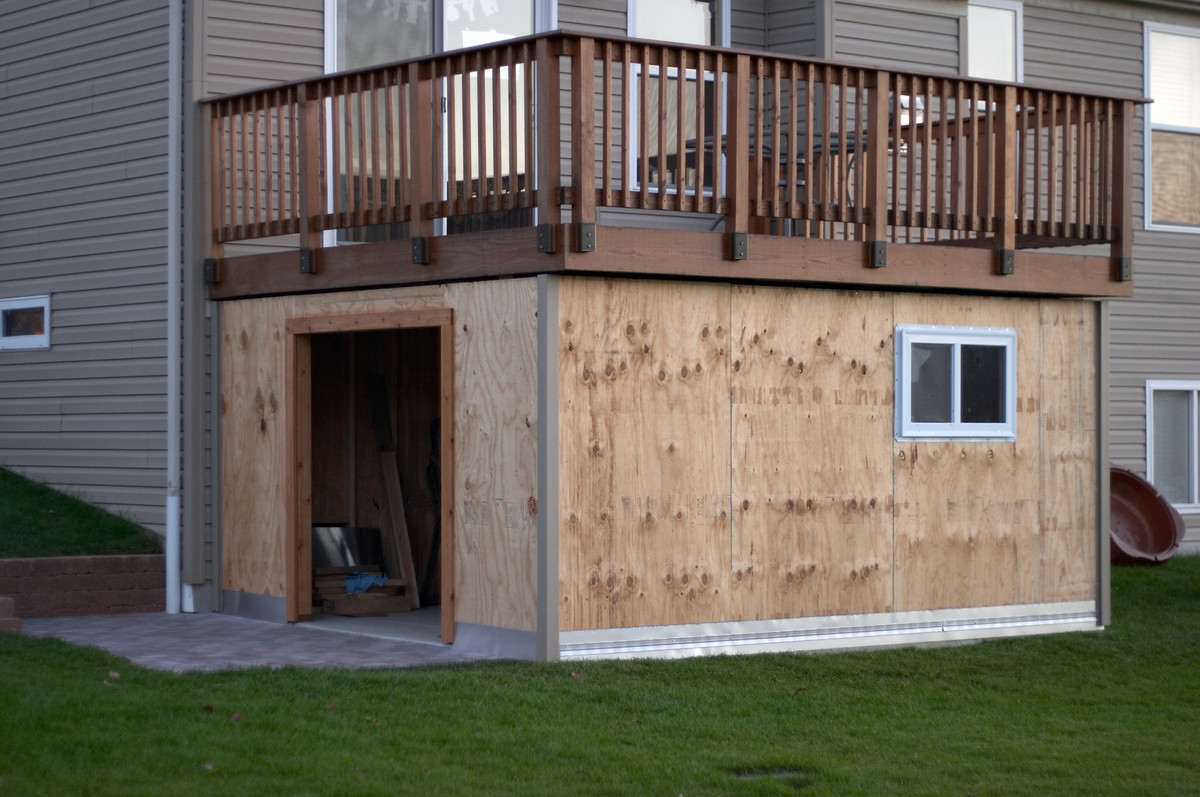
The doorway is short and non-standard. I had to build a custom double door.
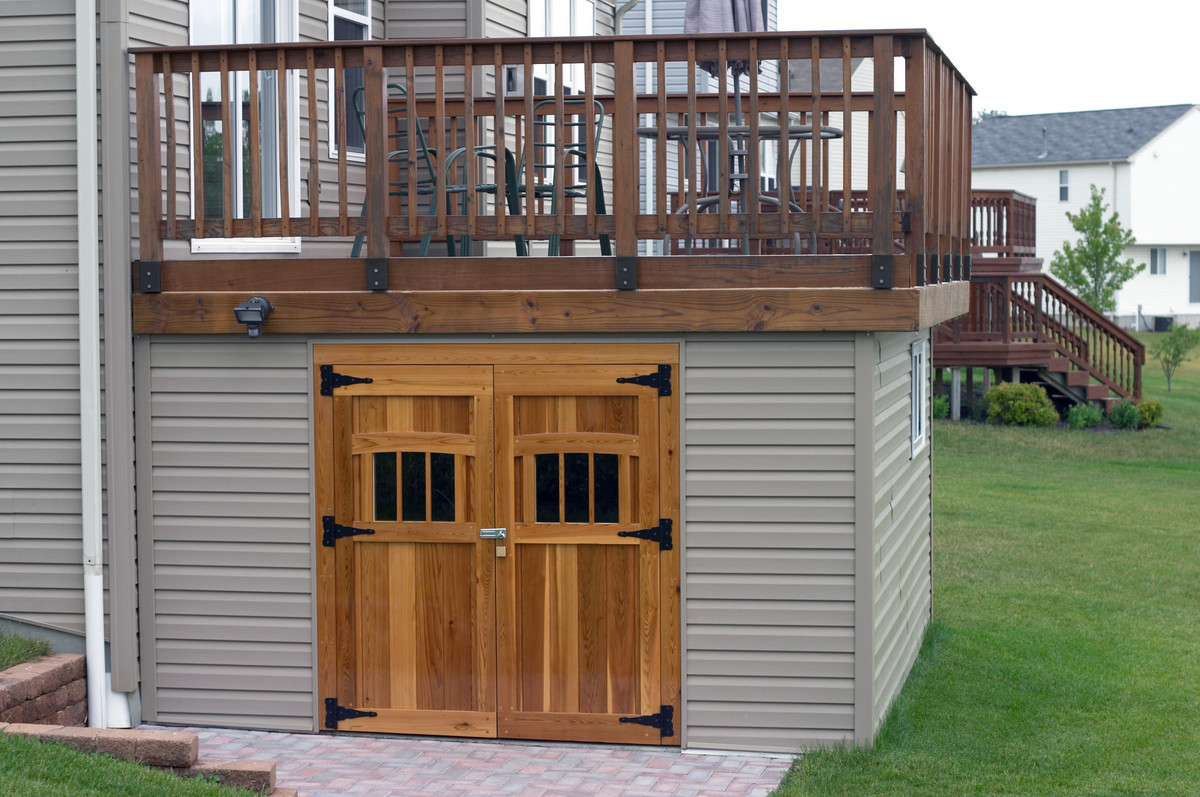
Another month or so would pass before I could finish my custom shed doors, but I’m happy with the result. I wanted my shed to look as nice as I could make it… so I wrapped it in matching vinyl siding. My trailer-lift project may have been my most gratifying project, but my shed has been the most useful. Good thing I allowed space for the concrete to heave in winter… because it did just that!
YAAA! My garage is clean and useable again.
Great build!
Where are you located? I am wondering about the concrete heaving. My mason poured a pad under my deck and asked if the concrete was going to heave in the winter. He said, “I wouldn’t worry about it.”
My plan is to do board and batten that is attached to my deck and run in clear to the concrete and up to the deck joists. However, I have to add two additional 4x4s or 6x6s near the house at the corner of the concrete to give my board and batten something to be fastened to. I would attached the top of the new post to the joist of the deck and anchor the bottom of the post to the concrete.
Do you see any harm in this? What are your thoughts?
@J-Low… I live in Michigan. Heaving concrete is nothing to worry about IF you are not going to attach the concrete in any way to your deck. But, if you do AND you live where the ground can freeze… then you should worry. If the ground freezes enough in winter… the concrete will heave (more further from your home and less closer to your home) and NOTHING can stop it from heaving, not even a strong deck. Solid ice can lift 10-20 tons per square inch. An elephant weighs 8 tons. Even though the moisture is mixed with soil… it will still have no problem lifting your shed and deck or crushing it until something gives. My shed is not attached to my deck in any way.
Building a storage shed under a deck is one tough job. Storage Sheds need to be built very carefully. For building a shed under a deck, you can screw sheets of corrugated metal or fibreglass roofing to the furring strips. This acts as a roof over the storage area. You can cut and install wood lattice around the deck foundation, so as to hide the storage area from view. For this purpose thicker lattice should be used, as it holds up better than the thinner lattice.
Did u used house wrap?
@Ethan, I didn’t use house wrap, but in hindsight it may have been a good idea. I’ve seen no signs of mold or rot and I don’t think there will be, since I was thorough with the vinyl siding installation. The shed still looks great, but my doors need refinishing now.
Thx, love ur shed. Buliding the same one right now hehe thank you for sharing. Just done with the roof, now working on the framing.
Dear Alan,
I have been surfing the internet while the snow flies and I enjoyed the blog.
For longevity did you use an ice and water shield or rubber under the aluminum to protect the OSB? I am a deck and porch contractor in Massachusetts and our climate is similar.
And since you mentioned it to another poster have you noticed any heaving of the concrete?
@Boston Deck, Thanks… I didn’t use anything between the aluminum and the OSB, but there are no signs of any problems. It might be a good idea, but in my case everything looks good. The concrete heaves every winter … at least 1/2 inch and usually more. Since I designed a space between my shed walls and the deck… there has been no problem. I hope to refinish the doors in the spring and I will try to shoot some new HD video of the condition of the shed. Except for the doors… it looks as good as the day it was built.
I really appreciate that you shared this project. I’m going to build it this spring. I’m a Minnesotan exiled to Indiana for work purposes. One question, what did you use on the exterior of the rear shed wall?
@Scott The inside wall next to the house is actually bare plywood. It was built tight enough to the house and the deck shielded it from the elements. The vinyl siding corners of the shed completely the obscure the ability to see the plywood.
Thank you for the great blog! I too live in MI, a suburb west of Grand Rapids and have a similar home built in 2001 (bi-level). I’m considering this task but I was wondering if you had to pull any permits from your city/township to build the shed and if there were footage requirements for a stand alone structure? I think I read on my township website that it has to be so many feet from my home.
Alan,
This has been an inspiration to me, just had concrete done for the floor. I am working with a ~600sq ft deck (12’x40′) with attached gazebo (12’x12′) which I am using half the space for a shop/shed and the other half for a patio. I am in the northern part of Virginia, and will be back to post some photos once the rainescape system is done before the walls go up. Heaving is still a concern even for Virginia or so I think, so I am still working on that solution.
Many many thanks again for doing this I can’t imagine how many homeowners you have inspired by the articulate details provided here.
Great blog!. Was a permit required? I am in a non-HOA area so I do not think I would need a permit. I am also in Northern VA. I am currently looking for someone to build me one like this so I can park the motorcycles during the winter clearing the garage for the cars!. If anyone know a good builder for an estimate please let me know.
I am interest to know how the aluminum flashing was attached to the house so there would be no leaking. We have an existing deck that we want to drain but there is no flashing to there now. We want to make sure and get all the rain but are not sure how to get the trough attached to the wall w/o leaks
I’ve many question over the years about why I built my shed unattached as I did. Here is a great website reference for why frost/ice heaving is so powerful and damaging… http://www.structuretech1.com/2013/06/frost-heave-and-deck-footings/
Since the deck is unattached, I assume there is no “roof”. Are the walls are only secured to the concrete slab and to each other only at the corners? Or is there other bracing to keep them solid and square? Thanks!
@ Ken K, Yes, technically there is no roof attached to the shed walls. The roof is incorporated inside the deck joists. The walls are bolted to the concrete and to each other in the corners. They are not attached to anything else. They are not attached to the deck and they are not attached to the house wall. They are very very rigid (no bracing needed) and do not move or wobble because they are bolted to the concrete. The gap is between the top of the wall and the deck and is maybe 1-2 inches and is difficult to see. Look at 2 minutes and 20 seconds in the video and you can see I filled the gap with some foam to prevent wasps and small animals and stuff getting inside. There is a skirt board wrapped around the lower part of the deck (attached to the deck only) which completely obscures the gap from the outside and prevents high winds and rain from getting inside.
Great project! I live in central NC and I’m considering doing the same thing under my screened in porch. I Don’t think I will have much to worry about water coming in through the roof since it is covered and we don’t get much of a winter so no heave. My questions are about how you poured your pad. Did you drill in your bolts? Thanks!
@Kelly Fritz, I had a professional pour my pad. I wanted precise control over where my concrete bolts would go… so I drilled them in after the concrete had cured and set bolts in the holes with industrial concrete epoxy which is meant for this purpose.
Alan, I am impressed! Congratulations.
Just moved to a house where there is a deck with nothing under.
I’m trying to understand how you managed to concrete the floor of your shed with the two posts already installed. I believe you probably dug the area, right? How to maintain the posts at their places?
Congratulations.
@Patrick… the posts were outlined with fiberboard material (the kind you see in concrete seams elsewhere). Then when the concrete was poured… it stayed 3/4″ away from the posts. Now the concrete can heave up and down in winter and simply slides around the posts. If you’re not looking too close.. the concrete looks like it touching the posts, but it has the fiberboard separation. Thanks for the good question.
Hi there, great post thanks for sharing.
Question :)…I have a deck with WPC and of course, it rains under..do you think I can attach the aluminum sheets from under?
sorry If I am not clear.
Salva
Thank you for sharing; I am planning to do something similar and been trying to find the best way to have a floating shed under the deck (which is >9ft off the ground). Prefer not yo have dig the many 42″ posts holes required for a non floating foundation. I plan on attaching metal roofing to the underside of the deck joists at an angle to drain water into a gutter at the end. For the floor I plan on using deck blocks with treated 2X6 and 3/4 inch treated plywood.
I assume for the inside plywood wall closest to the house you prebuilt the wall with the plywood and lifted it into place.
I was hoping to find a flexible material that could be used between the bottom of the deck and the top of the shed for both esthetic reasons and to keep things from moving in.
@John Is your deck attached to your home? If so, then the posts that support the deck must be dug below the frost line for your area. Otherwise, your deck will fatigue at the attach point to your home from the repeated freeze / thaw in winter and will fail.
The deck is attached to the house and the post supporting the deck have attached to footings below the frost line. What I am planning is building a floating shed beneath the deck
@John Oh, my shed is a floating shed as well. The concrete is simply laid on the surface around my posts with a gap. The shed is built on top of the concrete and a gap is left between the shed walls and the deck. I built the ceiling in between my joists. There is a skirt board around my deck to hide the gap and I fill the gap with seat cushion foam strips.
Thanks Alan, what type of foam do you reccomend and minimal thickness? I live in South Central CT, so I expect some up and down movement, but not sure on how much.
I am thinking of using deck blocks, 2X6″ supported plywood floor.
Alan…What part of the country do you live in? I’m in PA. Trying to compare winters.
How did you come up with an amount for the gap to offset the freeze lift of the pad? Just worried that I don’t put enough and lose a beautiful (and expensive) deck.
Thanks
When you poured the concrete floor, did you leave a gap between the deck joists and the floor? How big of a gap?
I am thinking about doing this at my new home to keep the yard open.
The deck is already built so drainage is going to be a little more difficult.
@Jason… I used the concrete spacer board which is similar in thickness to standard plywood.
Can you supply more information on what appears to be aluminum flashing for waterproofing at the bottom of the walls? Most shed designs have a raised floor with the wall overlapping the edge about 5 inches above the ground to prevent water from running up the walls. I have an existing concrete pad that is at grade on one side, and I would like to put a shed on top similar to yours, but need to prevent water from rain and snow running under the walls or from damaging the wood walls.
What did you use to secure the flashing to the floor joists? What brand industrial caulk did you use? Is this a caulk that dries hard or remains flexible? Did you put the caulk over the flashing onto the joist or between the flashing and the joist before securing the flashing to the joist? Have you noticed any buckling of the flashing due to thermal expansion? I ask because I know aluminum siding is not nailed securely to the exterior sheathing to let it expand. Your roof concept is a great idea. My son found it right before we were ready to demo his old deck and have incorporated it into his new deck design.
I used an air stapler and then sealed the staples and the edge of the flashing with “solar seal” caulk. That caulk is used to seal sun-rooms, so it is remains very strong and flexible. My shed roof is over tens years old now… and still no sign of leaks. I put the caulk over the flashing and onto the joists. No buckling of the flashing has occurred. Perhaps with a longer run this might happen, but with my 15 foot runs of flashing… no sign of it.
Awesome job. I was considering doing the same just to store the seasonal tools: snowblower, leaf blower, etc etc… Your project is exactly what I wanted to see. Thank you.
Alan, I have started the works – it is time to pour the concrete. Quick question: most of the contractors are ripping me off for the concrete slab so I’m thinking doing it myself – I know you hired someone to do that, but I was wondering if they dig deep, like 4 feet underground. Any idea if this is necessary for this kind of slab?
Hello, I love the look of your finished project and this is exactly what I am looking to do. We need to replace our deck which is really aging and beginning to look unsafe. Our house looks so similar to yours with the sloped yard on the side of the house where the shed entrance is, and even your shutters look the same. Anyway, I am not a handy person by any means and would never even attempt to do this on my own. I wanted to know what you think I could expect to pay someone to do all of what you did (the concrete slab, the deck, the shed underneath, materials and all, etc.) and basically follow everything you did. Thank you.
How can I view the plans to give to my contractor with out SketchUp?
I was thinking about building a shed underneath my deck, but I don’t know how to make sure the rain don’t get in from above. Since my deck is already built I don’t know how to do it or what to use so the rain do not come in?
there is a company that makes a product that you can use under a deck, I got mine at low s they use vinyl and other hardware with excellent instructions, it really works take your time and follow the steps it is a good system, any do it your self it is called Underdecking
the vinyl is easier to work with than tin or aluminum
After reading about your shed under your deck I hired a contractor to build one under an existing deck I already had. This room/shed was built last year and finished in June 2017. To date there is still a problem with it leaking. I have just sent them pictures again showing the areas where it leaked after the most recent (5 inches) rain that we had. They are at a loss as to what they can do to stop the leaking. Does anyone have any ideas on how to stop the leaking.