Archive for the ‘DIY’ Category

Wordpress Theme Update

January 19th, 2010 3 comments

Panofish.net has a new look.  The previous theme was a common Wordpress template.  Video is an important part of panofish.net and the old theme didn’t support 640×480 video, which is necessary for itunes subscribers.  Unobtrusive advertisements were also added to provide some revenue to hopefully cover server costs.  This blog is hosted on HostGator, the best web service provider in the world.  If you need a server for hosting your website(s), I highly recommend HostGator. Click the HostGator ad on this page and I will receive a small commission at no added cost to you.

Panofish.net now has a tool and book recommendations in the ad section. I receive a small commission if you purchase Amazon Tools or Books through my recommended links.

Software tools used to modify the panofish theme.

  1. CSSEdit (available only for the Mac).  Wordpress layout and appearance is almost entirely driven by CSS. CSSEdit is the best.
  2. Vector Magic.  Hands down… the best vectorization software.  Vector Magic was used to create vectors of the fish and other graphic elements.
  3. Illustrator CS4 was used to edit the vector art before exporting to Photoshop
  4. Photoshop CS4 was used to edit and compose graphic elements.
  5. 3ds Max and Vray were used to compose and render the new banner image.
  6. Notepad++ for editing the Wordpress PHP code.  It’s color coding makes it much easier to follow the PHP logic.

Here is a full sized version of the new Panofish.net logo.

panofish.net logo at 640x640

Categories: DIY Tags:

Uncle Woody’s Workshop Tour – Part 2

September 23rd, 2009 No comments

If you missed the first video of Uncle Woody’s Woodshop, you can see it here.
Just remember, the airplane is NOT a whirlygig. The term whirlygig is reserved for those store bought windmills.

Ignition Coil Pack Repair

August 22nd, 2009 1 comment

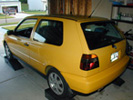
My 1998 VW Golf GTI VR6 is a great car, but it does have 1 nagging problem.  The ignition coil pack.  Initially, it took me a couple years to discover the cause of my engine’s hesitation and misfire codes.  When the first coil pack failed catastrophically, the spark plugs stopped firing and sent excess fuel down the exhaust and melted my catalytic converter.  I have replaced my coil pack 4 times now because none of the brands are reliable.  Overtime, the plastic housing of the coil pack begins to crack.  The hairline cracks allow sparks to jump to ground through the housing instead of going to the spark plugs resulting in random misfires.  The problem is multiplied whenever there is extra moisture on the coilpack, like the morning dew.

The coil pack for my VR6 costs around $200-$300.  Rather than buying a 5th coil and waiting for it to crack… I decided to repair my cracked one.  This technique has been covered before on many websites and forums.  Basically, you apply a 2 part epoxy over the cracks OR the entire plastic housing.  The epoxy is non-conductive and insulates the cracks.  My coil was very dirty, so I disassembled and washed it so the epoxy would stick.

Here is a 2 minute video of my repair.

Categories: DIY Tags: , , , ,

How Can I Check If My Hard Drive is Failing

August 17th, 2009 No comments

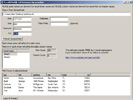
It’s inevitable… hard drives fail.  But when?  Recently, I had a hard drive that was acting strange and I needed a way to test its reliability.  The drive wasn’t making clicking noises yet (a sure sign that your drive is dying).  I needed a freeware program to test my hard drives and tell me if any were at risk of failing.  I found a utility called SeaTools for Windows.  It’s from Seagate, but the software will work with most any modern hard drive.  It doesn’t work with usb connected drives however.  I was able to run a couple tests on my suspect drive and determine with certainty that it was failing.

Another interesting feature of SeaTools was its ability to read the S.M.A.R.T. attributes of the hard drive.  The most interesting SMART attributes were the “hard drive temperature” and the “power on hours”.  My failing maxtor drive had 36509 hours on it.  That’s about 4.2 years of continuous use.  My Western Digital drive has 47802 hours (5.5 years continuous), but it passed all tests and is still working fine.   Another interesting fact according to wikipedia “Disk failures and their metrics” is that there is a higher failure rate for hard drives in cool conditions versus hot conditions.  I had always assumed that heat was the enemy, but the opposite is actually true.

You can also use the freeware utility Speedfan to read hard drive SMART data. Speedfan may not be able to thoroughly test your hard drives like SeaTools, but it also provides a wealth of other technical data about ALL of your computer hardware.

Wikipedia also states that 60 days following the first scan error on a drive, the drive is, on average, 39 times more likely to fail.  The lesson here… maintain backups of your precious data and be S.M.A.R.T.


Categories: DIY Tags: , ,